Mikhail Alexandrovich Berlioz
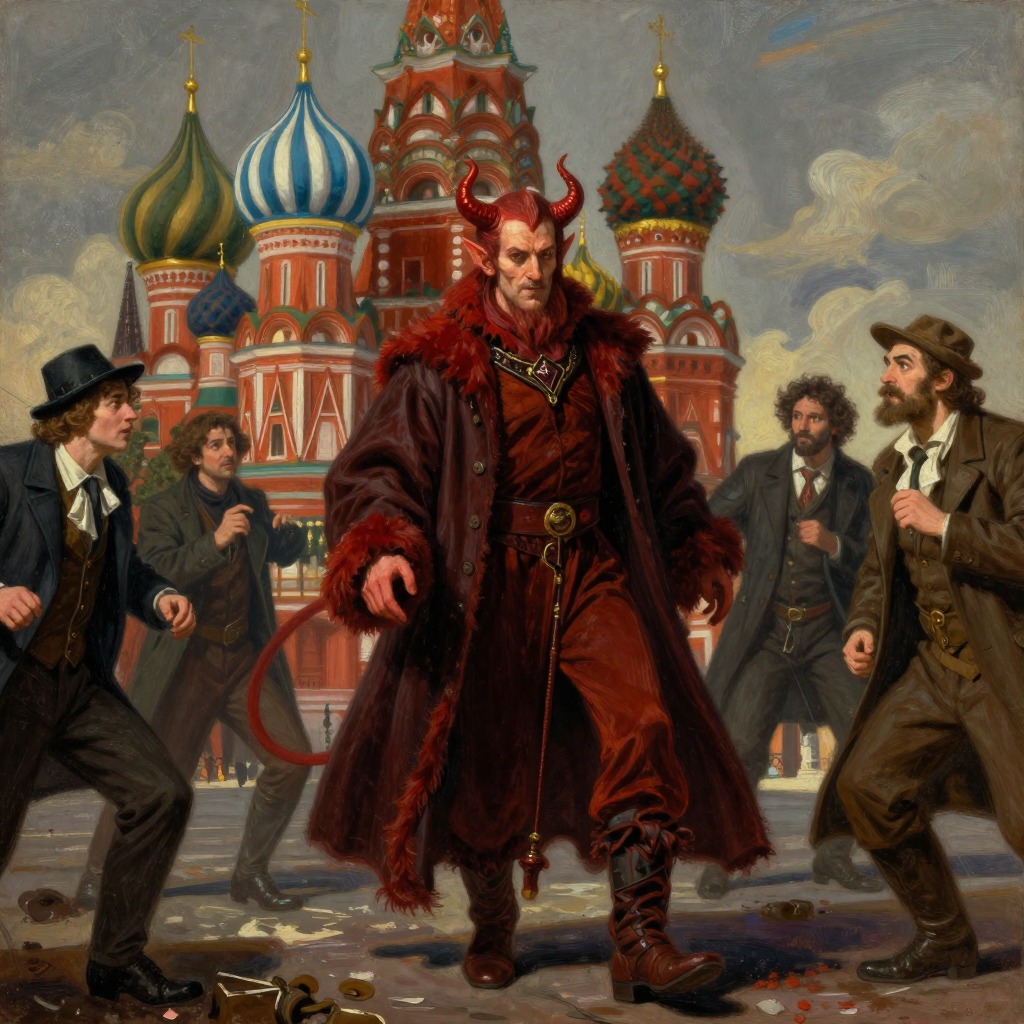
Mikhail Alexandrovich Berlioz, editor of a fat literary journal and chairman of the board of Massolit, is the first Muscovite to encounter the devil Woland at the Patriarch's Ponds. His death under a tram-car, precisely as Woland foretold, is the catalytic event that shatters the normalcy of Soviet life and launches the novel's intertwined narratives. Berlioz is the embodiment of the official, atheistic Soviet intelligentsia, a man whose rationalism and ideological certainty make him utterly vulnerable to the supernatural forces that have arrived in Moscow.
Identity and Role
Berlioz is introduced as a short, plump, bald man of about forty, dressed in a grey summer suit and wearing black horn-rimmed glasses of a supernatural size. He is the chairman of Massolit, the powerful literary association that controls access to publication, dachas, and restaurant privileges. He commissions a long anti-religious poem from the poet Ivan Homeless and lectures him on the non-existence of Jesus, displaying a solid erudition by citing ancient historians like Philo of Alexandria and Flavius Josephus. Berlioz is a well-read man, but his knowledge is deployed in the service of state ideology, reducing all religious belief to mythology. He is the gatekeeper of official literature, a position that grants him authority and comfort, but also makes him a target for the forces that oppose that very order.
Encounter with Woland and the Prophecy of Death
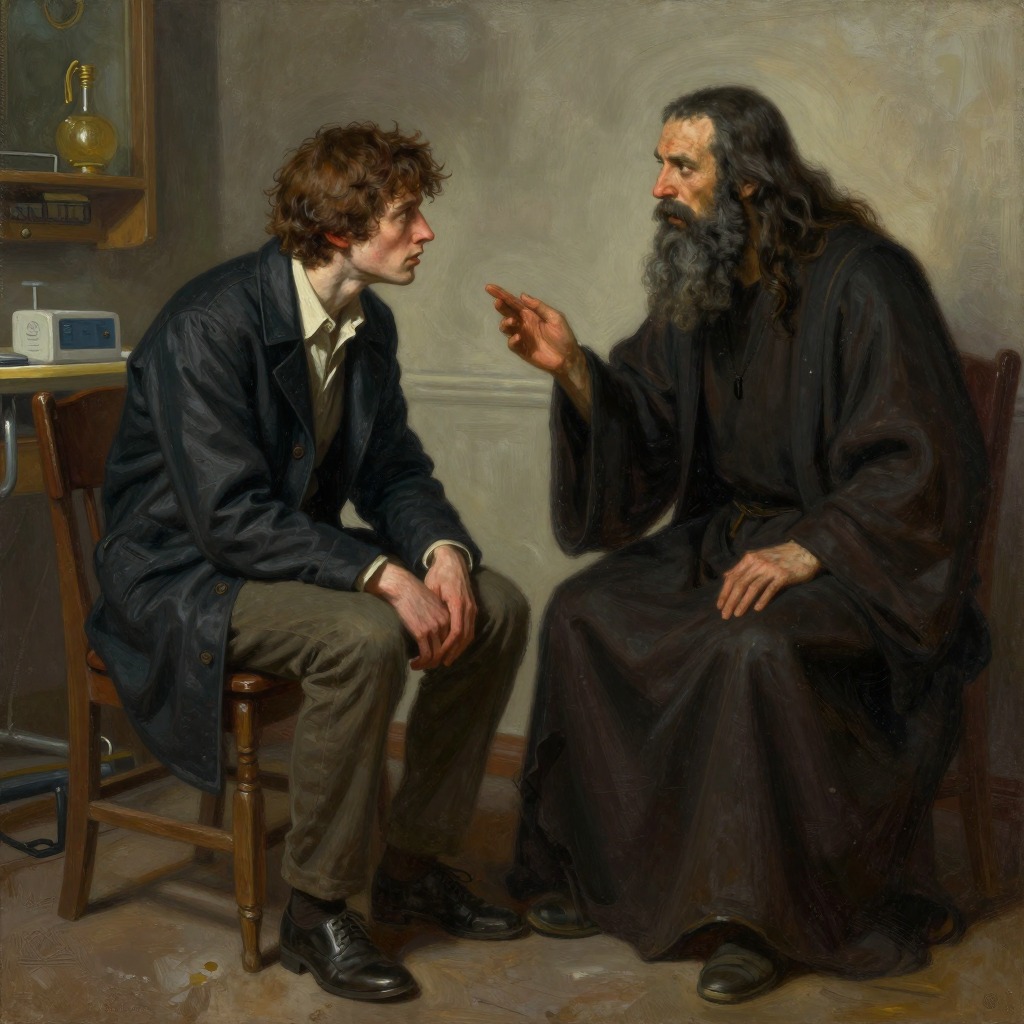
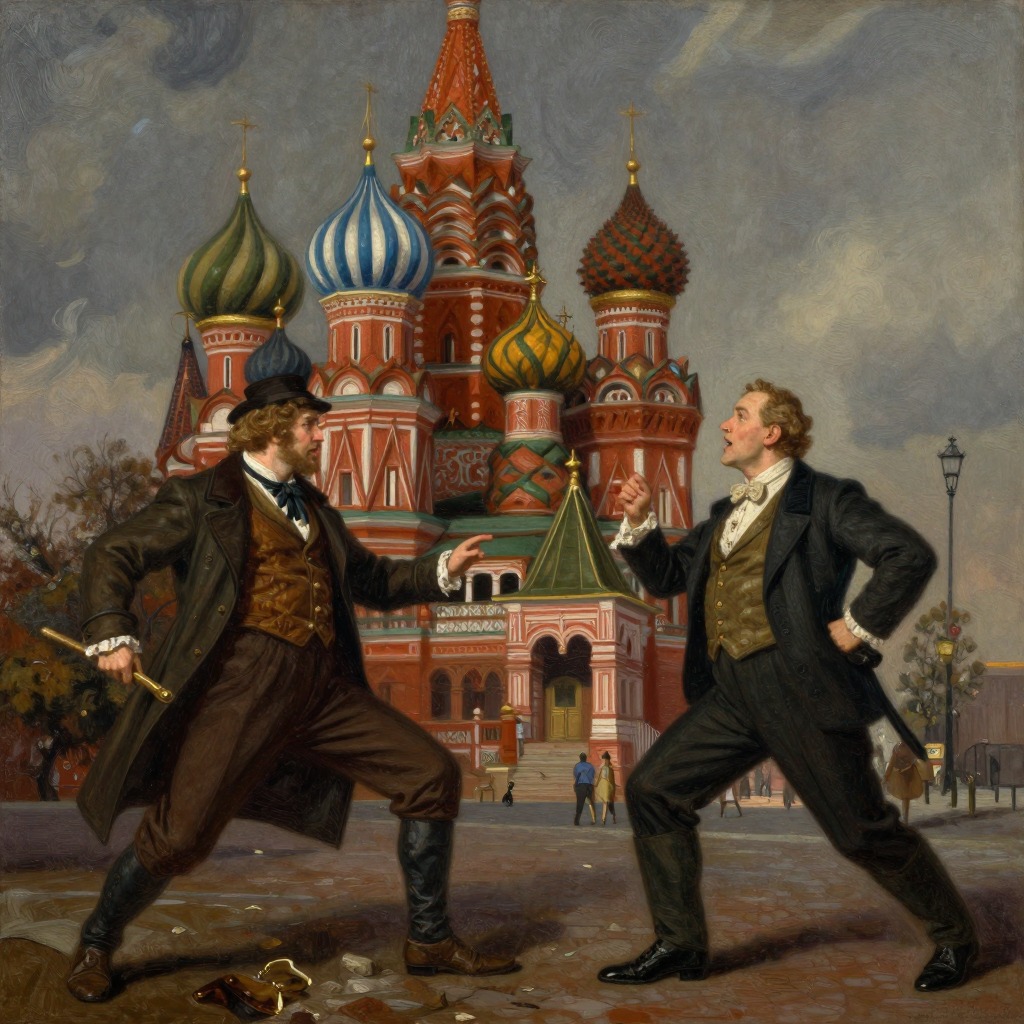
At the hot spring sunset, Berlioz and Homeless sit at the Patriarch's Ponds, discussing the poet's unsatisfactory poem about Jesus. A strange foreigner, Woland, joins them and is surprised by their atheism. Woland argues that man cannot govern his own life, as he cannot vouch for his own tomorrow, and predicts that Berlioz will die by having his head cut off by a Russian Komsomol girl. He also states that the meeting Berlioz plans to chair that evening will not take place because Annushka has already spilled sunflower oil. Berlioz, initially thinking the foreigner is a mad German, decides to call the foreigners' bureau. As he runs towards the turnstile, he slips on the spilled oil, falls under a tram-car driven by a woman, and his head is severed. The prophecy is fulfilled instantly, confirming Woland's supernatural knowledge and power.
The Aftermath and the Empty Suit
Berlioz's death throws the literary world into chaos. His body is taken to the morgue, where his severed head is placed on a zinc table. His apartment, No. 50 on Sadovaya Street, is sealed, and a scramble for his living space begins. His uncle, Maximilian Andreevich Poplavsky, rushes from Kiev, hoping to inherit the apartment. The most bizarre consequence of Berlioz's disappearance occurs in the Commission on Spectacles and Entertainment, where his empty suit continues to sit at his desk, writing with a dry pen and speaking in his voice. This surreal image, witnessed by the bookkeeper Vassily Stepanovich Lastochkin, underscores the absurdity of the bureaucratic system Berlioz represented: the institution continues to function mechanically even after the man himself has been annihilated.
Thematic Significance
Berlioz is the novel's primary representative of the "normal" reality that Woland's arrival exposes as fragile and illusory. His confident atheism is the official dogma of the Soviet state, and his death is a direct refutation of that dogma. Woland's prophecy and its fulfillment demonstrate that there are forces beyond human reason and state control. Berlioz's fate also illustrates the novel's central theme of cowardice: his refusal to even consider the possibility of the supernatural is a form of intellectual cowardice that leaves him defenseless. He is the first to fall, a warning to all who believe they can govern their own lives within a system of imposed terror. His severed head, which later appears at Satan's Grand Ball, becomes a symbol of the fate that awaits those who serve the false gods of ideology and power.